
Oral & Maxillofacial Surgery
2306 24th Avenue
Astoria, NY 11102
Phone: 718.440.3457/58
Fax: 718.440.3137
Wisdom Teeth and Anesthesia
How serious is an impacted wisdom tooth?
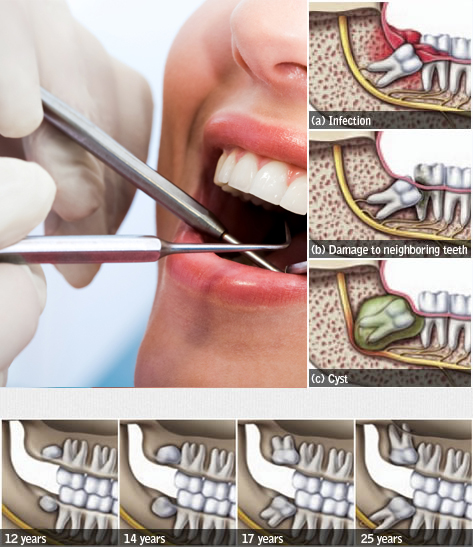
If left in the mouth, impacted wisdom teeth may damage neighboring teeth, or become infected. Because the third molar area of the mouth is difficult to clean, it is a site that invites the bacteria that leads to gum disease. Furthermore oral bacteria may travel from your mouth through the bloodstream, where it may lead to possible systemic infections and illnesses that affect the heart, kidneys and other organs.
Complications such as infection (fig. a) , damage to adjacent teeth (fig. b) and the formation of cysts (fig. c) may arise from impacted teeth
Wisdom Teeth Growth by Age
Wisdom teeth are easier to remove when the patient is younger, since their roots are not completely formed, the surrounding bone is softer, and there is less chance of damaging nearby nerves or other structures. Removal of wisdom teeth at a later age becomes more complicated as the roots have fully developed (may involve the nerve), and the jawbone is denser.
Anesthesia
- The best way to reduce anxiety is to make certain you know what to expect during and after surgery. As with most anxiety-producing situations, the more you know, the less you have to be anxious about. Prior to surgery, your Oral and Maxillofacial Surgeon will review with you the type of anesthetic to be used, as well as the way you’re likely to feel during and after the operation. This is the time to discuss any concerns you may have about any facet of the operation.
- During surgery, one or more of the following may be used to control your pain and anxiety: local anesthesia, nitrous oxide-oxygen, intravenous sedation and general anesthesia. Commonly, patients describe their feelings during surgery as comfortable and surprisingly pleasant.